How to Design a Kutte Before You Start Sewing
A practical walkthrough for planning a kutte's patch layout before you pick up a needle, from choosing the garment to testing scale and contrast.
Watercolor illustration of a design studio desk with dress sketches, fabric swatches, scissors, and a lit candle.
A kutte is not a merch table with sleeves. It is the bands, places, memories, politics, jokes, and obsessions you choose to wear in public. Learning how to design a kutte starts before the needle comes out: put the patches in a layout that feels like yours, then make sure it will still work once denim, seams, pockets, and real-world patch sizes enter the picture.
There are no strict rules. A death metal vest packed edge to edge can look right. So can a mostly bare punk jacket with one enormous backpatch and a few hard-won additions. The goal is not to copy somebody else's formula. The goal is to make intentional choices, avoid sewing a patch somewhere you will regret, and leave room for the jacket to grow with you.
Start with the garment, not the patch pile
Your jacket sets the boundaries for every design decision. A sleeveless denim vest has broad, usable panels and the classic battle vest silhouette. A denim trucker jacket gives you sleeves, cuffs, and a little more visual territory. Leather can look incredible, but it is harder to sew through and often needs a different attachment method. Start with the thing you are actually willing to wear, not the garment you think a kutte is supposed to be.
Color matters too. Black denim makes bright woven patches and white logos hit hard, while blue denim brings more contrast and a traditional look. Faded gray, red, and military green can all work, but they change how every patch reads. If your collection is mostly dark printed patches, a dark jacket may flatten them from a few feet away. A lighter garment or a border of brighter patches can fix that.
Check the practical features before planning. Chest pockets interrupt the front layout. Side seams curve. A panel that looks wide on a hanger may become narrow when the vest is worn. Measure the usable back area from shoulder yoke to hem and from side seam to side seam. Those measurements are more useful than guessing based on a product photo.
Give the back a clear purpose
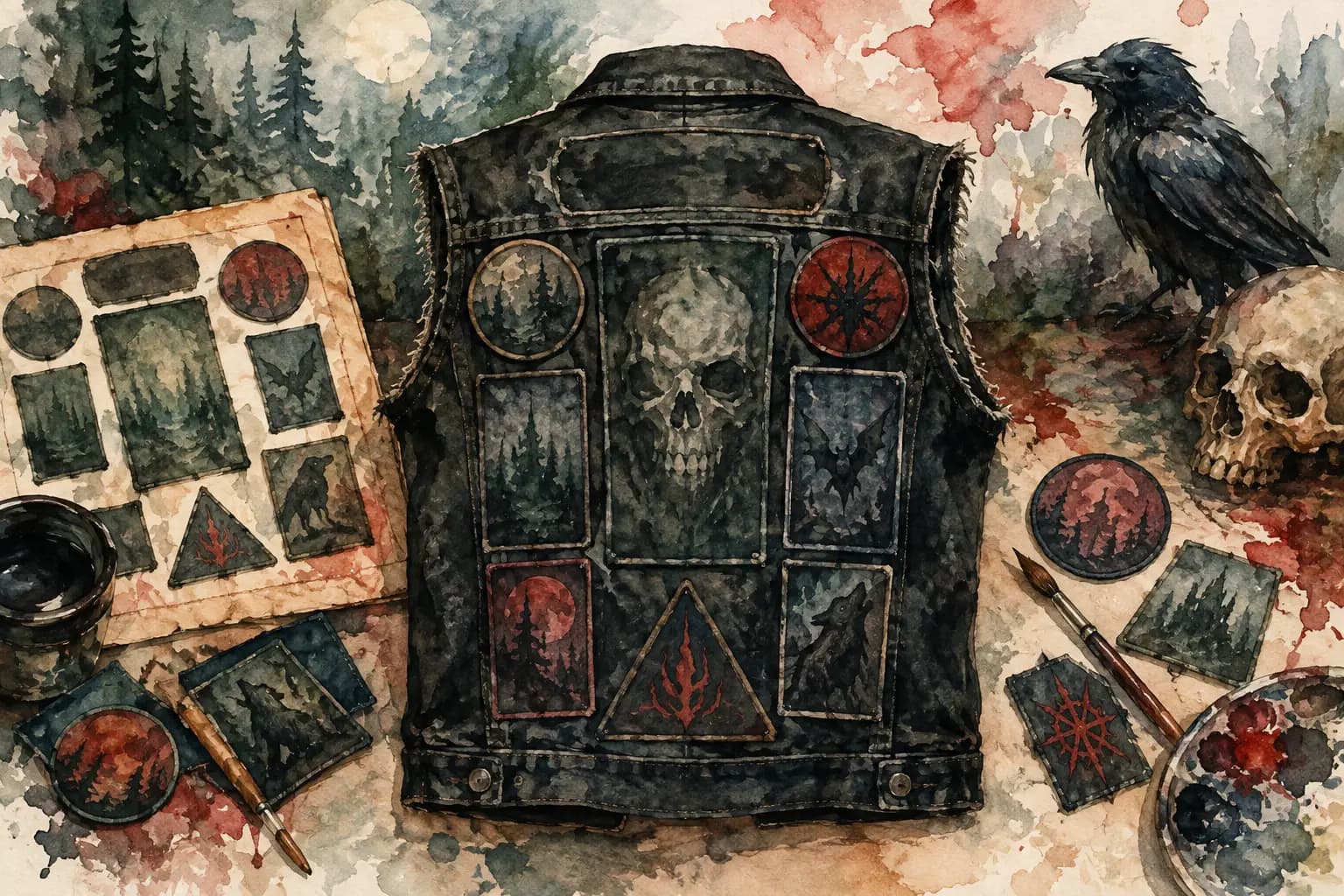
For most kuttes, the backpatch is the visual anchor. It is the first thing people see in a crowd, and it usually establishes the jacket's main mood: black metal severity, crust chaos, old-school heavy metal, hardcore, punk, or anything else you want it to say.
Pick the backpatch early, then design outward from it. Center it between the side seams, but do not assume mathematical center is always visual center. A shaped patch, an asymmetrical logo, or a jacket with an uneven yoke can need a small adjustment to look right. Leave enough clearance around the edges for stitching and for smaller patches if you plan to frame it.
A big backpatch does not mean the rest of the back has to be packed. Some designs use a border of rectangular patches around it. Others add a rocker above, a band logo below, or a few carefully spaced odd shapes. Dense coverage can be powerful, but only when the shapes feel connected rather than crammed into every empty inch.
If you do not have a backpatch, you can still build a strong back. Try a grid of similarly sized patches, a central large woven piece, or a loose collage organized around one standout patch. The key is hierarchy. Give the eye one place to land before it starts moving around the design.
Plan for seams and movement
Avoid placing a large patch directly across a thick yoke seam or a side seam unless you are ready for extra work. The patch may pucker, lift at the edge, or sit strangely once the jacket is on your body. Likewise, leave a little breathing room at the hem. A patch sewn too low can curl or get worn down faster.
Wear the jacket while checking your plan. The back panel shifts when your arms move, and the front panels fold around your torso. A layout that looks perfect flat on a table should also look good on a human being.
Build the front like a collection, not a mirror image
The front is where kuttes become personal up close. It is also where people make the most expensive placement mistakes. Chest pockets, lapels, buttons, snaps, and the opening of the jacket all break up the space, so the front usually benefits from smaller patches and more flexibility than the back.
Many people reserve the upper chest for favorite bands, local scenes, memorial patches, or a name patch. Small rectangles work well above or beside pockets. Circular patches and pins can soften a layout full of straight-edged logos. A vertical patch along a placket can be a great use of awkward space, but make sure it does not stop the jacket from opening or closing.
You do not need symmetry. In fact, forced symmetry can make a kutte feel more like a uniform than a record of your taste. Balance is different. If one chest has a large, bright patch, the other side may need a few smaller dark pieces, a pin cluster, or some open space to keep the whole front from feeling lopsided.
Be selective with pins. They are easy to move, which makes them perfect for testing ideas, but they can snag, rust, or leave holes over time. Use them where a little movement and imperfection suits the look. For a patch you want permanently, sew it.
Test scale, contrast, and reading distance
A patch can be great on its own and disappear completely in the full layout. Before committing, look at the jacket from three distances: up close, across a room, and in a mirror or phone photo. Each view catches a different problem.
Up close, check for overlapping edges, crooked lines, and crowded stitching space. From across the room, check whether the backpatch and biggest logos still read first. In a photo, check contrast. Dark red on black, black text on navy, and heavily detailed printed patches can turn into visual mud when the light is bad.
A grayscale view is useful here because it removes the distraction of color. If two neighboring patches blend together in grayscale, add separation. That might mean shifting one patch, turning it slightly, placing a lighter border nearby, or leaving a strip of denim visible between them. You do not need every patch to shout. You just need the important ones not to vanish.
Patch size is another common trap. A 4-inch patch sounds modest until it is sitting next to a 2-inch circle on a narrow front panel. Work with real measurements whenever possible. If you are ordering patches later, note their dimensions and plan a little tolerance for handmade variation.
How to design a kutte without wasting patches
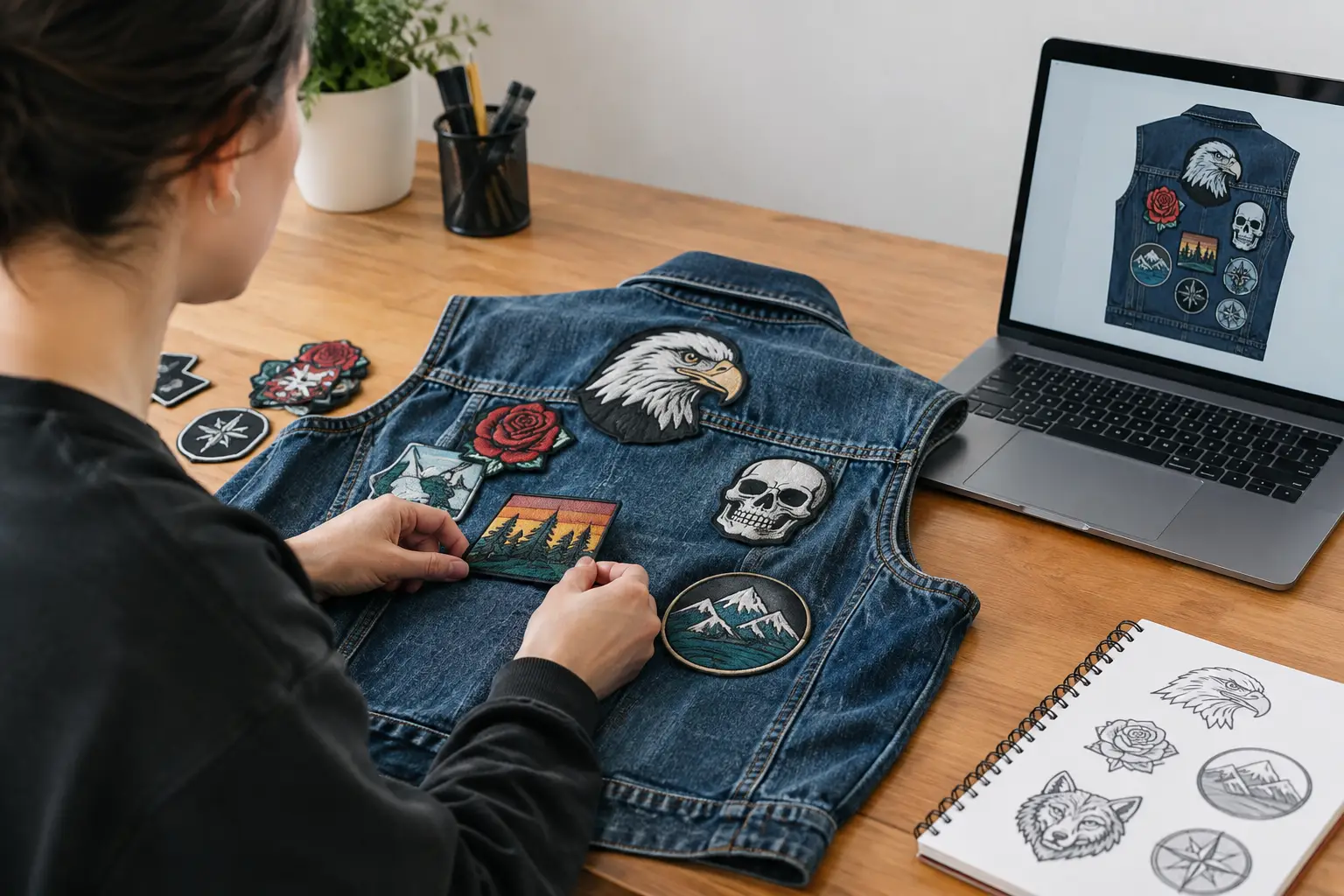
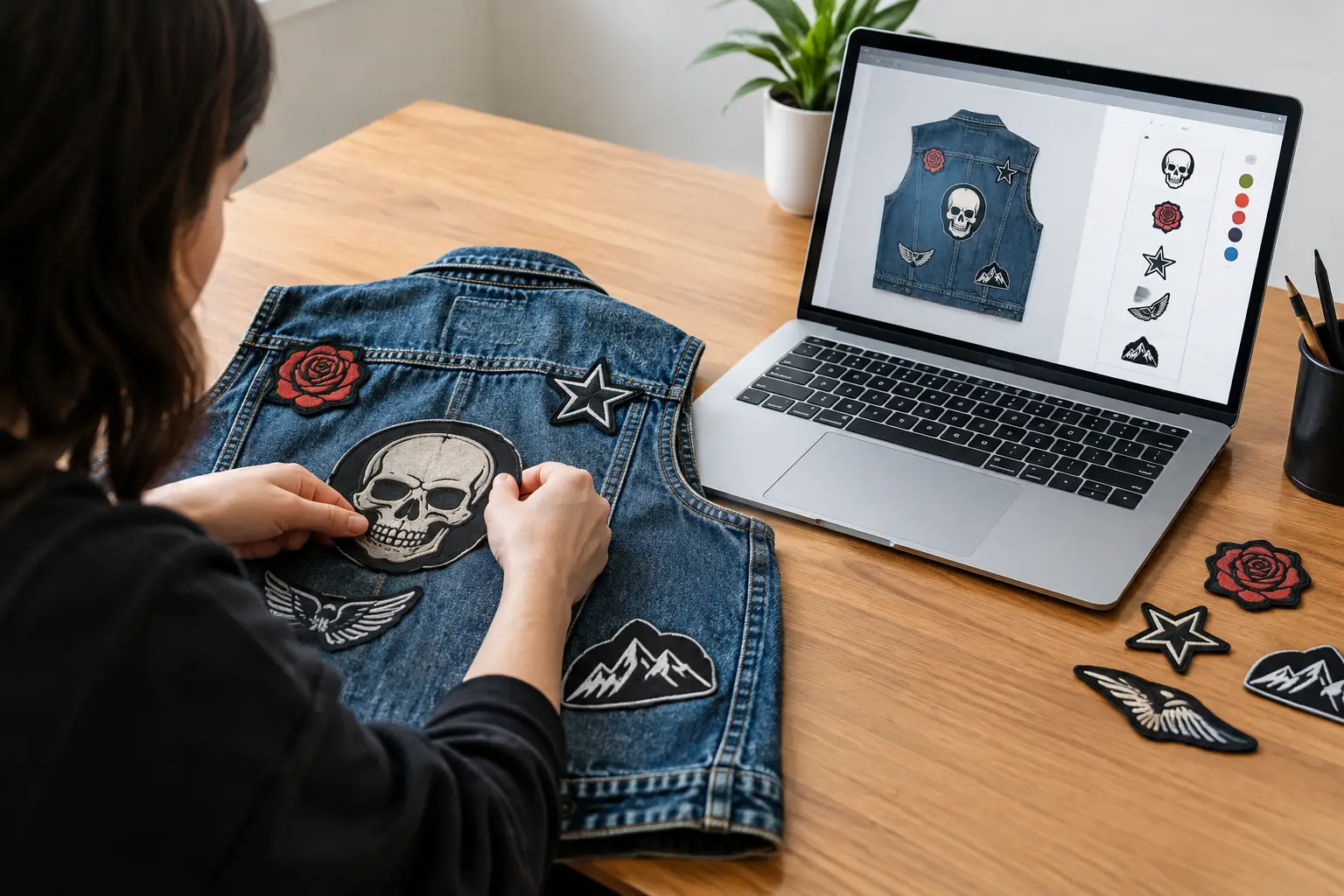
The smartest move is to test the full layout before sewing. Lay the jacket flat, place every patch, and take photos from the front and back. Move things around until the design feels settled. Then leave it alone for a day. The patch you were certain about may suddenly feel too large, too close to another logo, or wrong for the jacket's overall direction.
Digital planning makes this stage less chaotic, especially when you have a growing patch stash. The Black Thread lets you choose a jacket or vest, upload patch images or use a community patch library, and arrange them on front and back views before making anything permanent. Scale, rotation, grayscale checks, and centimeter measurements are not just nice extras - they help translate a screen layout into a sewable one.
Whether you plan digitally or on the floor, save a final reference image. Include a close view of crowded areas and note which patches overlap seams, pockets, or one another. This gives you something to return to if the pieces shift while you are working.
Do not sew everything at once. Start with the backpatch and the largest front pieces, then try the jacket on again. Large patches change the drape and can reveal that a smaller patch needs to move. Once the anchors are secure, fill the gaps gradually. It is much easier to make a thoughtful adjustment before the jacket is fully covered.
Leave room for the future version of you
A good kutte does not have to be finished this month, this year, or ever. Empty denim is not failure. It can be a deliberate part of the composition, or simply room for the band you have not found yet, the tour you have not attended yet, or the patch that finally earns that spot.
Your design can be clean and organized, battered and overloaded, genre-pure, or completely contradictory. Make it readable enough that you enjoy looking at it, practical enough that you will wear it, and personal enough that nobody could mistake it for someone else's. Then thread the needle and let the jacket collect its own history.