Battle Vest Versus Battle Jacket: Which Fits?
Weigh sleeves, patch space, warmth, and cost to find whether a vest or a full jacket fits how you really dress for shows.
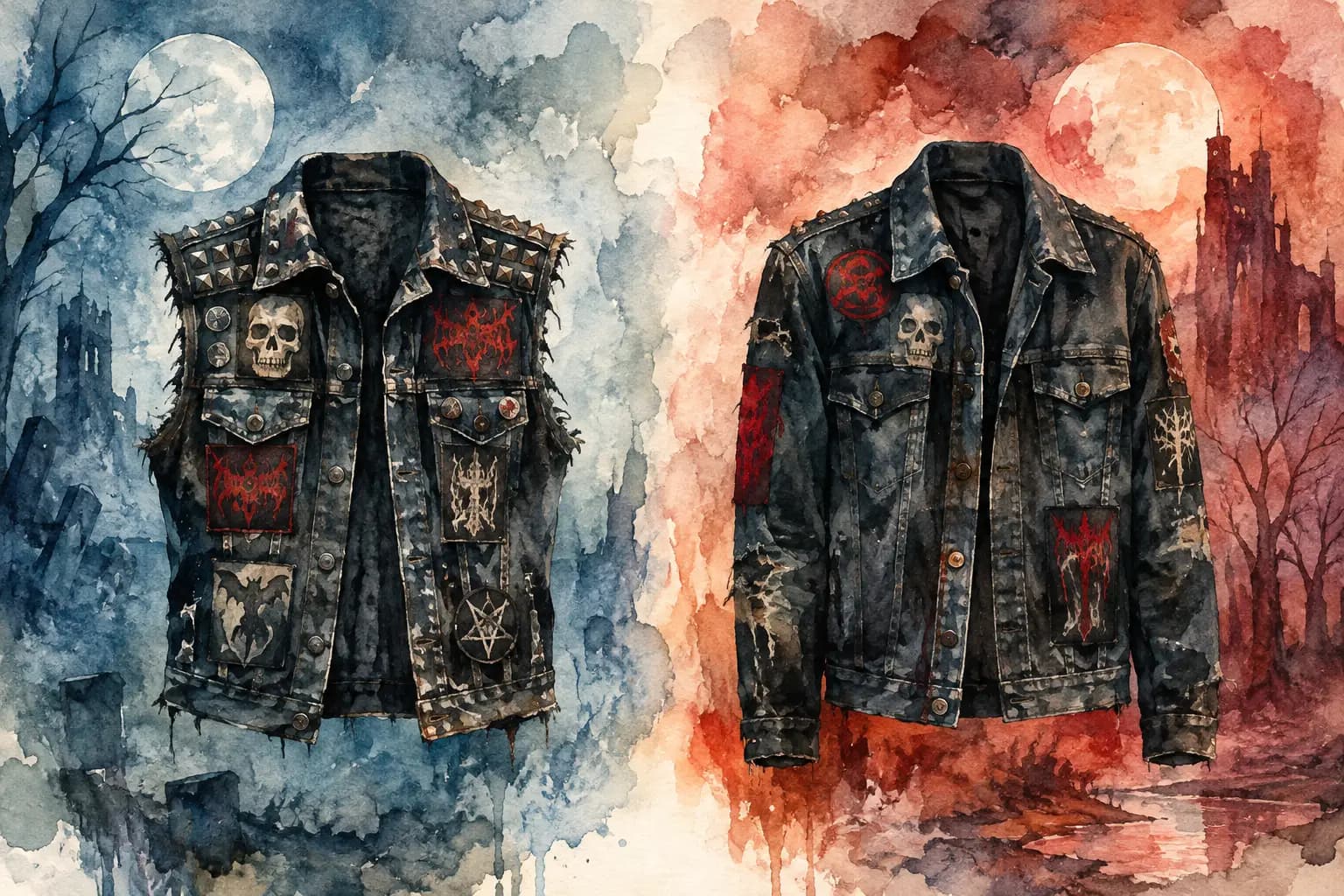
Split watercolor illustration comparing a studded battle vest with skull and pentagram patches against a blue moonlit graveyard, and a sleeved denim battle jacket with patches against a red moonlit cityscape.
A battle vest versus battle jacket decision usually starts with one very practical question: what will you actually wear to shows, rehearsals, record stores, and random late-night hangs? Both can become a personal archive of bands, friends, scenes, and years spent hunting patches. The difference is not which one is more legitimate. It is how much garment you want to work with, how you dress, and how you want the finished piece to feel on your body.
A kutte does not need permission from a rulebook. Still, choosing the right base before you sew anything down can save you from a cramped backpatch, a jacket that lives in the closet eight months a year, or a vest that feels unfinished because you really wanted sleeves.
Battle Vest Versus Battle Jacket: The Real Difference
The simplest distinction is sleeves. A battle vest is usually a sleeveless denim or leather layer, while a battle jacket keeps its sleeves and gives you a more complete outerwear silhouette. But that small structural difference changes patch space, comfort, durability, and the visual weight of the whole build.
Vests are the classic warm-weather and pit-friendly choice. They layer easily over band tees, hoodies, flannels, and long sleeves. They also put the focus squarely on the patches, especially when the front is packed with smaller logos and the back carries a big statement piece.
Jackets are better when you want the garment itself to be part of the look. Sleeves create more room for personality, whether that means a few carefully chosen patches, painted details, studs, stripes, or simply worn-in denim. A jacket can feel more substantial, especially in colder states or scenes where people wear their battle gear year-round.
Neither choice says more about your taste in music. The right answer is the one you will reach for often enough to let it pick up real history.
Choose a Battle Vest If You Want Flexibility
A vest is often the easier first build because it is simple to layer and easier to wear in changing weather. Throw it over a hoodie when it is cold, over a tee when it is not, and it still reads clearly as your piece. If you are regularly in packed rooms, outdoor festivals, or hot clubs with poor ventilation, removing the sleeves can make a real difference.
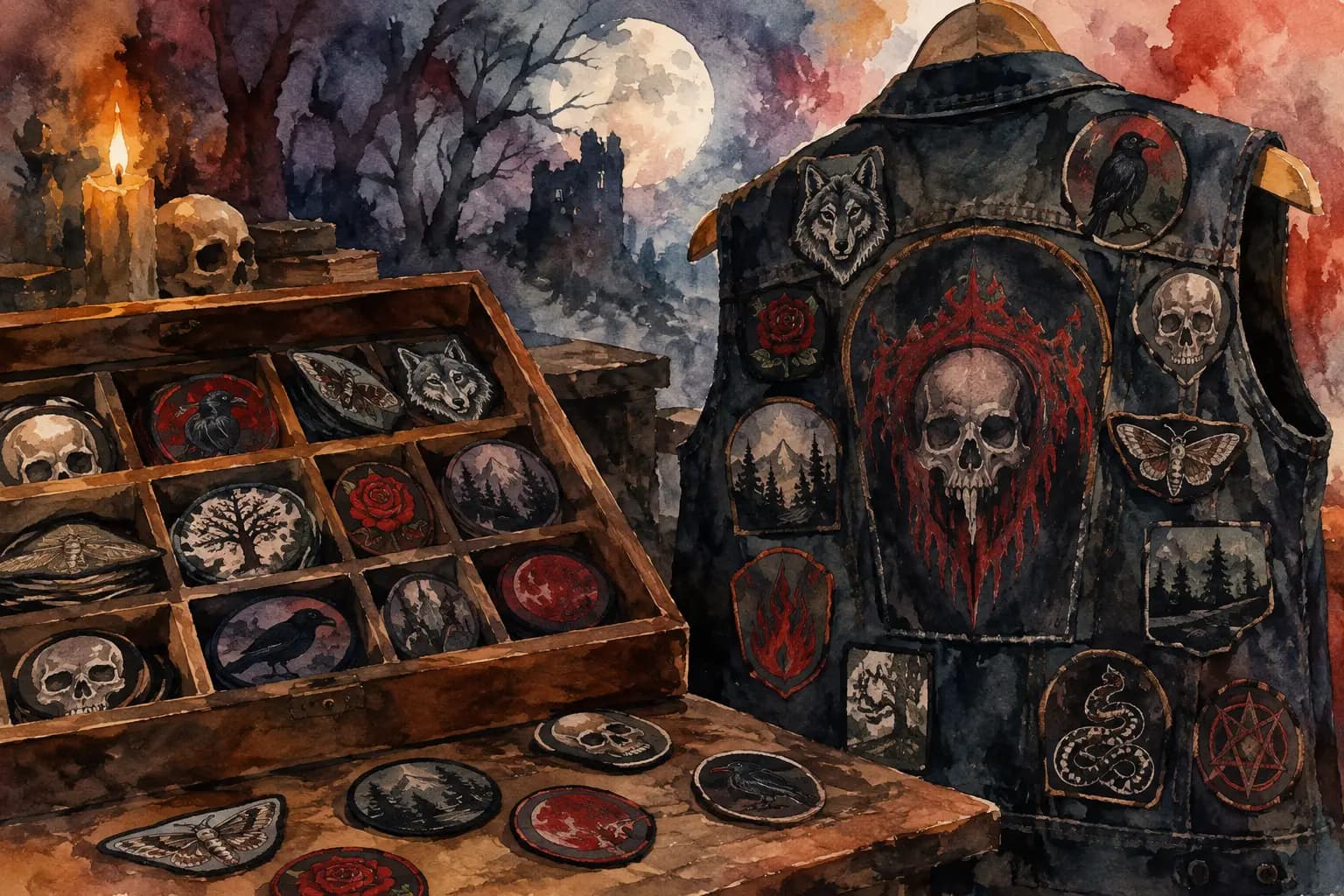
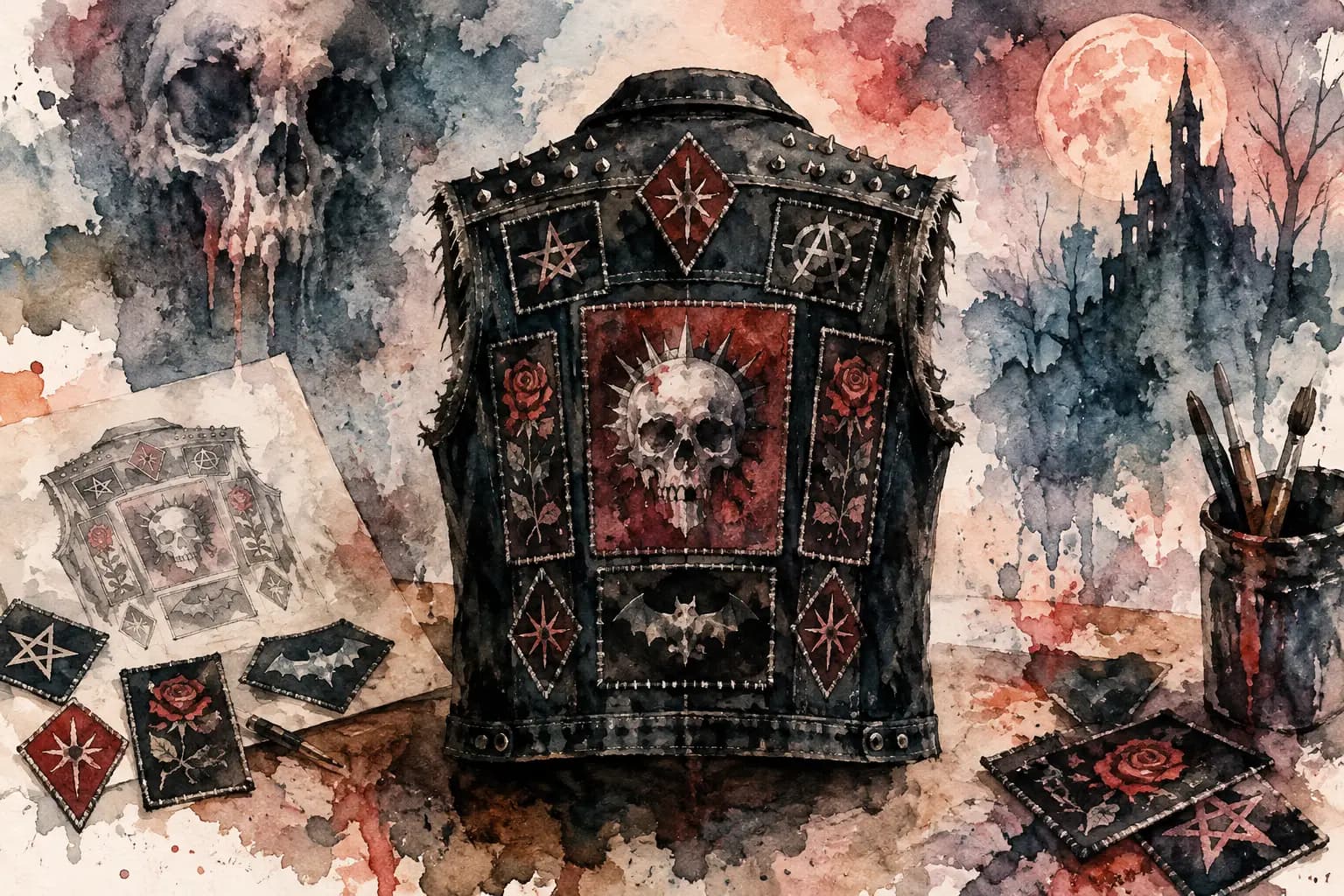
It also gives you a clean patch layout to plan. The back panel is usually the main event: backpatch centered, supporting patches around it, and enough breathing room that the design does not turn into a wall of competing rectangles. On the front, the chest panels, pockets, and seams naturally divide the space into smaller zones.
The trade-off is that a vest has less total real estate. You cannot count on sleeves for narrow patches, small band logos, or a chain of tour memories. That limitation is not a problem if you prefer a focused layout. It can be a blessing if you tend to buy every patch you see and need a garment to tell you when enough is enough.
A vest also works well if you are cutting down an existing denim jacket. This is a time-tested DIY route, but try it on before committing. Sleeve openings can sit differently after cutting, and a jacket that looked perfect on a hanger may feel too tight across the shoulders once it becomes a vest.
Choose a Battle Jacket If You Want More Canvas
A battle jacket gives you more places to build without forcing every patch onto the front and back. Sleeves are useful for long logo patches, small embroidered designs, flags, screen-printed pieces, and details that would look lost on a large back panel. They can also balance a heavy backpatch by carrying visual weight farther out from the center of the garment.
For some people, a jacket simply feels more complete. A dark denim jacket with a large backpatch, strong chest placement, and a few sleeve details has a deliberate, armored look. Leather can take that even further, although it brings different sewing and attachment challenges.
The obvious downside is heat. A full jacket can be miserable at a summer festival or in a crowded venue, especially if it is lined, thick, heavily studded, or layered over another shirt. It may also be less convenient to pack, tie around your waist, or wear while traveling.
Jackets can cost more to build, too. Not because sleeves demand patches, but because extra space often invites extra purchases. More canvas makes it easier to expand the project forever. That can be fun, but it helps to decide early whether you want a sparse jacket, a gradually evolving one, or a fully packed wall of fabric and thread.
Patch Layout Changes With the Garment
The best layouts respond to the actual shape of the base garment, not just a pile of patches on a table. A rectangular backpatch may look centered when measured, yet feel too high because it crowds the collar or too low because it disappears when you sit down. Chest patches can look crooked when they are technically straight because jacket seams and pocket angles pull the eye in different directions.
On a vest, start by treating the backpatch as the anchor. Leave room around it before you place smaller patches. That negative space is not wasted space. It helps the focal point hit harder and gives you room for future additions if your tastes change.
On a jacket, look at the sleeves early. You do not have to fill them, but knowing whether they are part of the plan changes how dense the body should be. If you add several bright or high-contrast patches to one sleeve, consider whether the other sleeve or front needs enough weight to keep the whole garment from feeling lopsided.
Color matters as much as size. Black patches on black denim can look great up close but vanish from a few feet away. High-contrast embroidery may dominate more than expected. Checking your design in grayscale is a useful way to see whether the visual balance still works when color stops doing all the work.
Fit Matters More Than the Label
Do not buy a base only because it is labeled denim, trucker, biker, or vintage. Put it on the way you plan to wear it. If your vest will usually go over a hoodie, test it over a hoodie. If the jacket is for a tee at summer shows, make sure it does not feel restrictive through the shoulders and chest.
Pay attention to the back width. A narrow or heavily tapered jacket can make a standard backpatch difficult to place cleanly. Pocket flaps, center seams, yokes, and decorative panels all affect where fabric can be sewn flat. The same applies to the front: pockets can be useful borders, but they can also make a patch bulky or prevent it from sitting flush.
Thrifted and secondhand garments are often great bases because they already have character and usually cost less than buying new. Just inspect the fabric first. Thin, brittle denim, peeling faux leather, or stretched seams may not hold up once you add heavy patches, studs, and repeated wear.
Plan Before You Sew
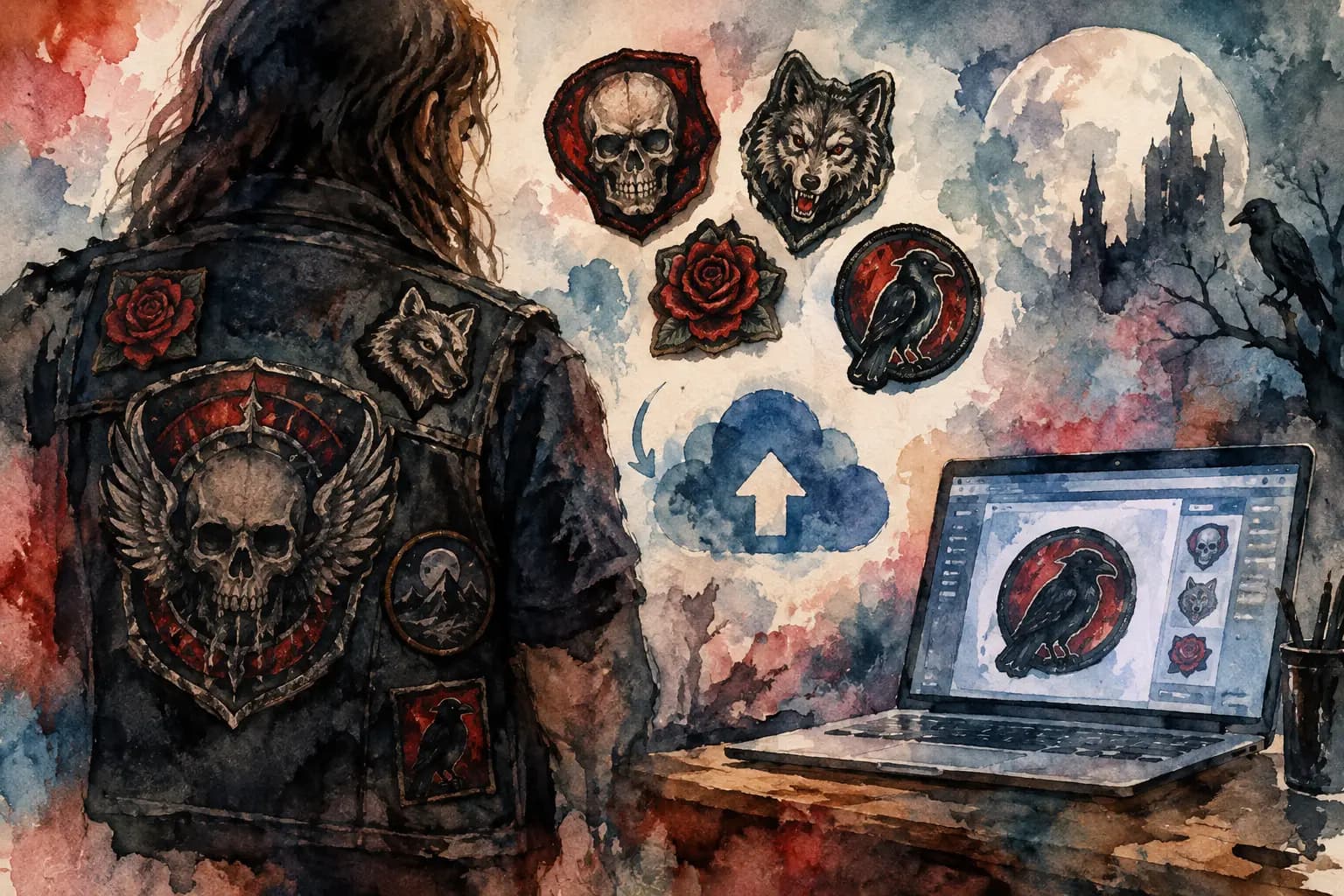
Patches are expensive, and a permanent stitch is harder to reconsider than a drag-and-drop layout. Photograph or scan the patches you own, place them against a jacket or vest template, and test more than one arrangement. Try the front and back together, not as separate projects. A crowded front with an equally crowded back can feel intentional, but it can also make every individual patch disappear.
Use real measurements whenever possible. Measure the patch, measure the usable panel on the garment, and account for seams, pockets, and edges. A design that looks fine at a tiny scale can fail once you realize the backpatch is three inches wider than the panel you planned for.
The Black Thread lets you test those choices before thread touches denim. You can choose a vest or jacket template, add your own patch images, adjust scale and rotation, switch between front and back views, and save a layout as a sewing reference. You can start planning without an account, then create one if you want to keep editing designs later.
There Is No Wrong Base, Only a Better Match
A battle vest is usually the move if you want easy layering, a lighter feel, and a focused patch layout. A battle jacket makes sense if you want sleeves, more room to build, and something that can carry you through colder weather. Plenty of people own both because they serve different parts of the year and different versions of their style.
If you are stuck, start with the garment you already wear most. Lay out the patches you cannot imagine leaving off, measure the back panel, and see what the design asks for. The right base is the one that gives those patches a home and still feels like yours when you put it on.